The case for cast iron
Cast iron is an alloy of iron and carbon, poured molten into molds and cooled into a single piece of dense, thick cookware. No layers, no coating, no weak points—just solid iron that can take whatever you put it through and outlast every other pan in your kitchen. The process hasn't changed meaningfully in centuries, which tells you something about how well it works.
The defining property of cast iron is heat retention. Once a cast iron pan is hot, it stays hot—drop a cold steak in and the temperature barely moves. That sustained, consistent heat is what creates a proper crust rather than just steaming the surface of whatever you're cooking. It works equally well on the stovetop, in the oven, on the grill, or over an open flame, and it transitions between all of them seamlessly.
The other thing cast iron does that no other material can replicate is seasoning. With regular use, layers of polymerized fat bond permanently to the iron and build a naturally nonstick surface that improves the more you cook with it. A cast iron skillet used daily for a few years develops genuine nonstick performance—not "nonstick with the right fat and the right technique," but actually nonstick, in the way that makes eggs slide and fish release cleanly. And unlike synthetic coatings, the seasoning doesn't wear out. It keeps getting better.
Advantages
Heat retention. Cast iron's mass acts as a thermal battery—it stores heat and releases it steadily, which is exactly what you want for searing meat, frying, and any cooking where consistent contact heat matters. It also means the pan holds its temperature when food hits it, rather than dropping sharply and steaming instead of searing.
A surface that improves over time. This is cast iron's most underappreciated quality. A well-seasoned cast iron pan is better at year five than it was at year one, and better still at year ten. No other cooking material has this trajectory. Stainless performs consistently for decades; cast iron performs increasingly well. That's a fundamentally different relationship with a piece of cookware.
Longevity. A Griswold skillet made in 1920 is still cooking eggs today. That's not a marketing claim—it's just what cast iron does. With basic care, a cast iron pan will outlast every other piece of cookware you own, and the people who own it after you. Stainless steel is durable; cast iron is essentially indestructible.
Versatility across heat sources. Cast iron works on every stovetop—gas, electric, induction, glass top—and transitions to the oven, grill, or open flame without any adjustment. There's no temperature limit, no surface it won't work on, and no cooking environment it can't handle.
No coatings. Pure iron and fat, nothing else. No PFAS, no PTFE, no ceramic that chips after a year, no coating that degrades and ends up in your food. Cast iron is the cleanest cooking surface available, and the fact that it gets better with use means you're never replacing it.
Who it's right for
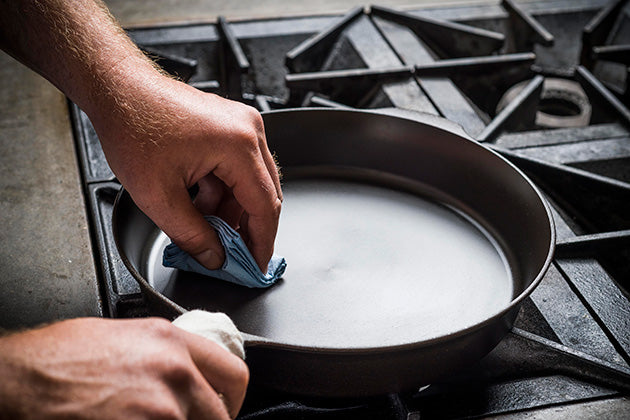
Cast iron is the right primary pan for most home cooks—not as a compromise, but as the better choice for the majority of everyday cooking. For minimalist kitchens in particular, it has the most versatility. It handles searing, frying, baking, and eggs better than any other material, and its performance improves with use in a way nothing else matches. The maintenance requirement is real but modest: dry it after washing, apply a light coat of oil, store it properly. For cooks who cook regularly, that routine becomes second nature quickly. Cast iron does have a genuine limitation with acidic dishes cooked for extended periods—tomato-based braises, wine sauces that simmer for hours—where stainless or enameled cast iron is the better tool.